Mobile App Design, iOS & Android, Healthcare Technology
AVRI Stories
Audio visual storytelling app connecting families across distance and reducing behavioral challenges in dementia care through familiar voices and personalized narratives
Mobile App Design, iOS & Android, Healthcare Technology
Audio visual storytelling app connecting families across distance and reducing behavioral challenges in dementia care through familiar voices and personalized narratives
Full mobile experience on both platforms
Separated by distance or health challenges
Optimal duration for engagement and comfort
Discovery through market launch
AVRI Stories is an innovative mobile app designed to help individuals stay connected with their loved ones, even when physical distance or health challenges like dementia create separation. The app was born from observing residents in care facilities experiencing anxiety, fear, and agitation from missing their families—behavioral challenges that needed a compassionate technological solution.
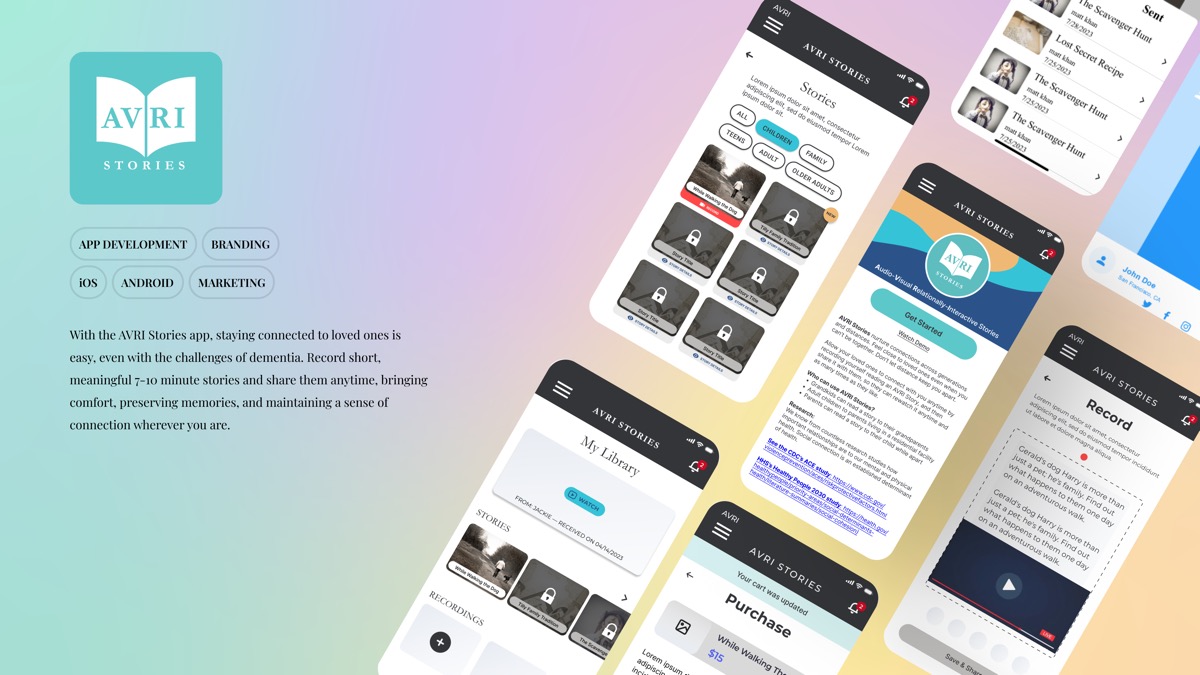
By allowing users to record themselves reading short stories (approximately 7 minutes each), the app provides a way for family members to share meaningful moments that can be accessed anytime, offering comfort and continuity. Beyond residential care, AVRI Stories serves families separated by distance, parents connecting with children when they can't be present, and anyone wanting to maintain emotional bonds across physical separation.
Guided complete product lifecycle from discovery through market launch, managing all phases of design, development coordination, and delivery
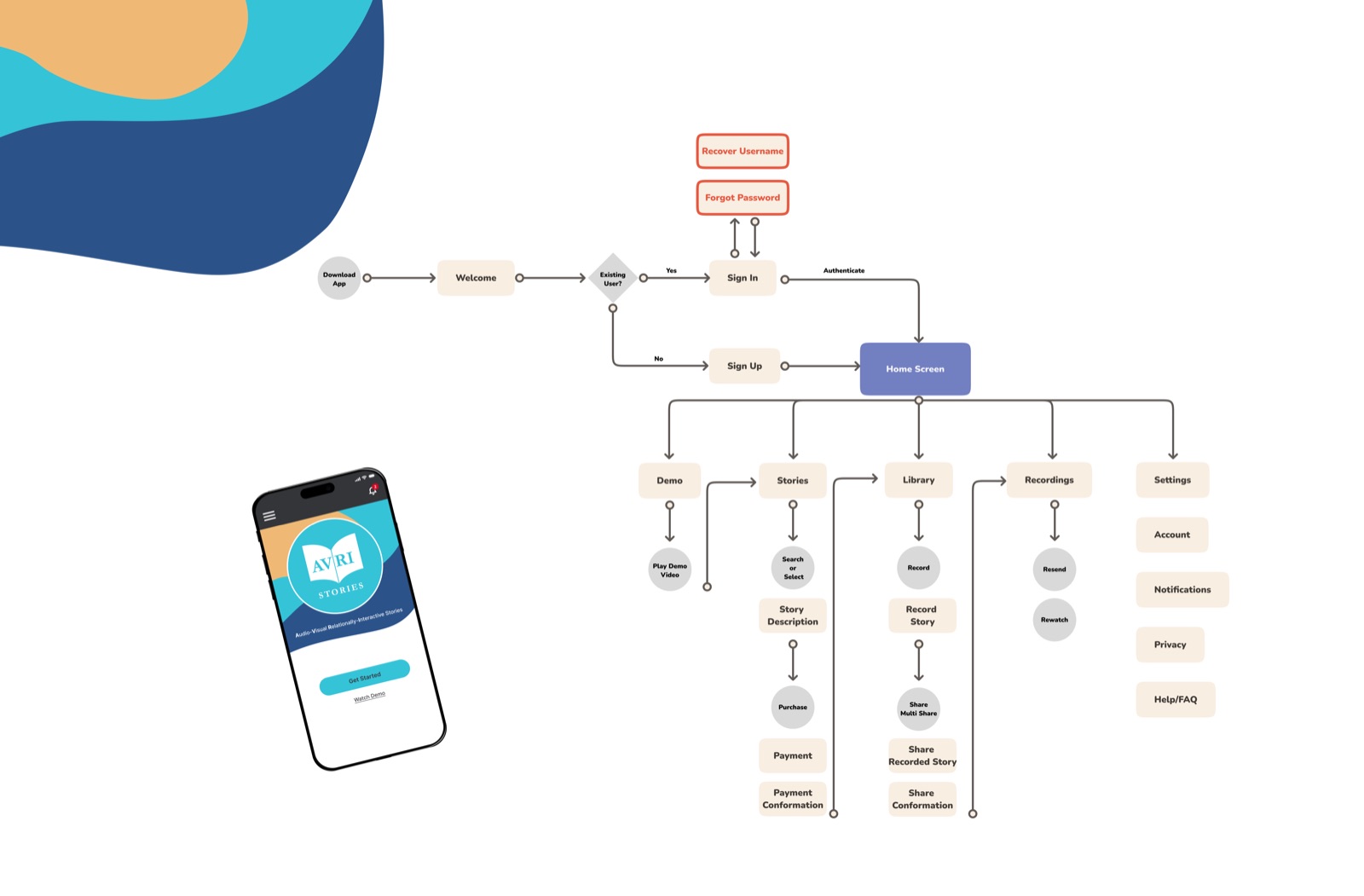
Gathered requirements, created user stories, developed information architecture including site maps and user flows
Created complete visual identity system, designed wireframes and prototypes from low to high fidelity, prepared development assets
Managed sprint planning, collaborated with developers, led user testing and QA through successful iOS and Android launch
I served as Lead UX/UI Designer, owning the end to end product experience from discovery through launch readiness on both iOS and Android. I partnered closely with stakeholders to translate an emotionally complex problem space into a clear, accessible, and human centered digital experience.
My role spanned research synthesis, UX strategy, visual design, and development collaboration. I created the product's information architecture, wireframes, prototypes, and design system while supporting sprint planning, developer handoff, usability testing, and QA through MVP completion.
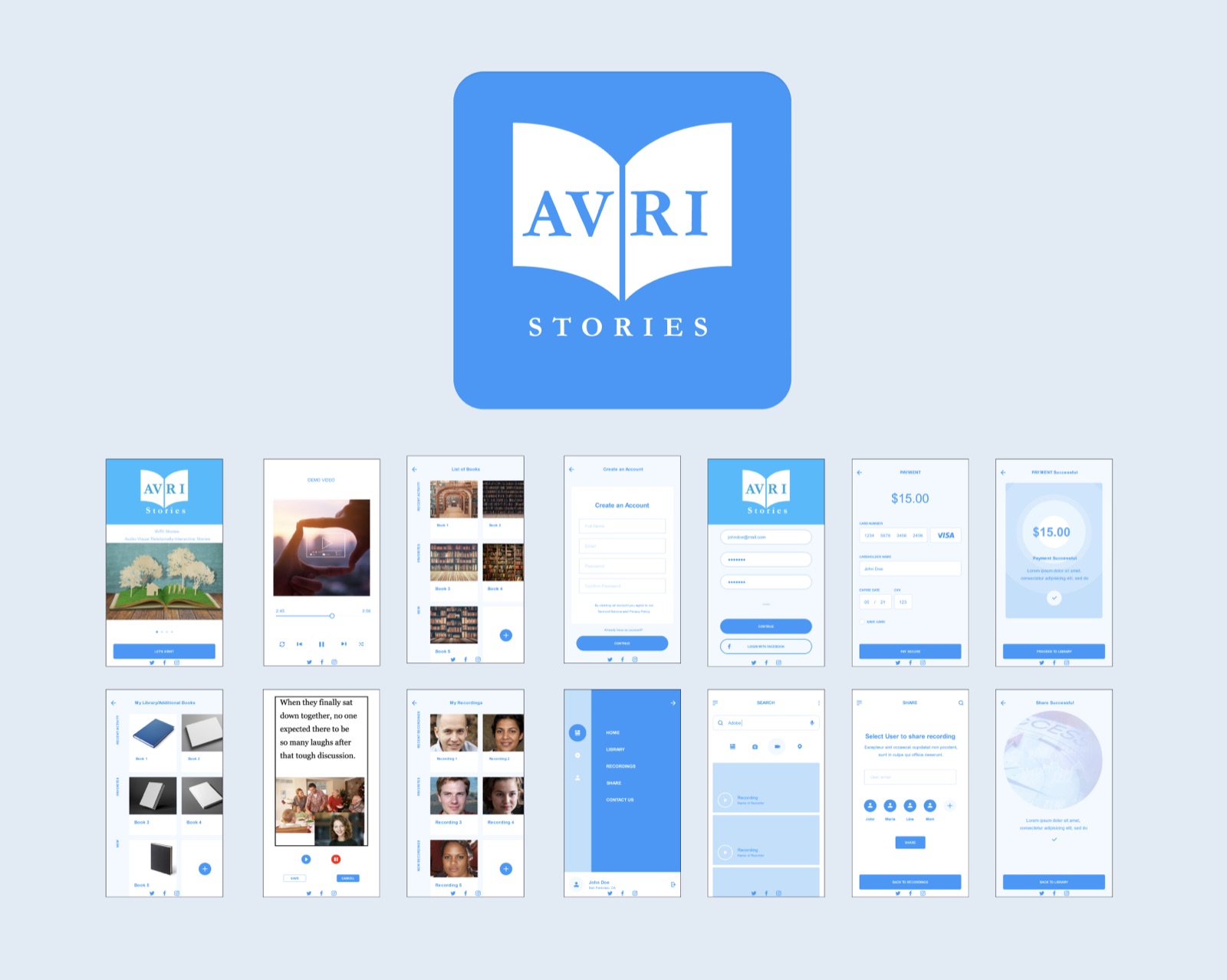
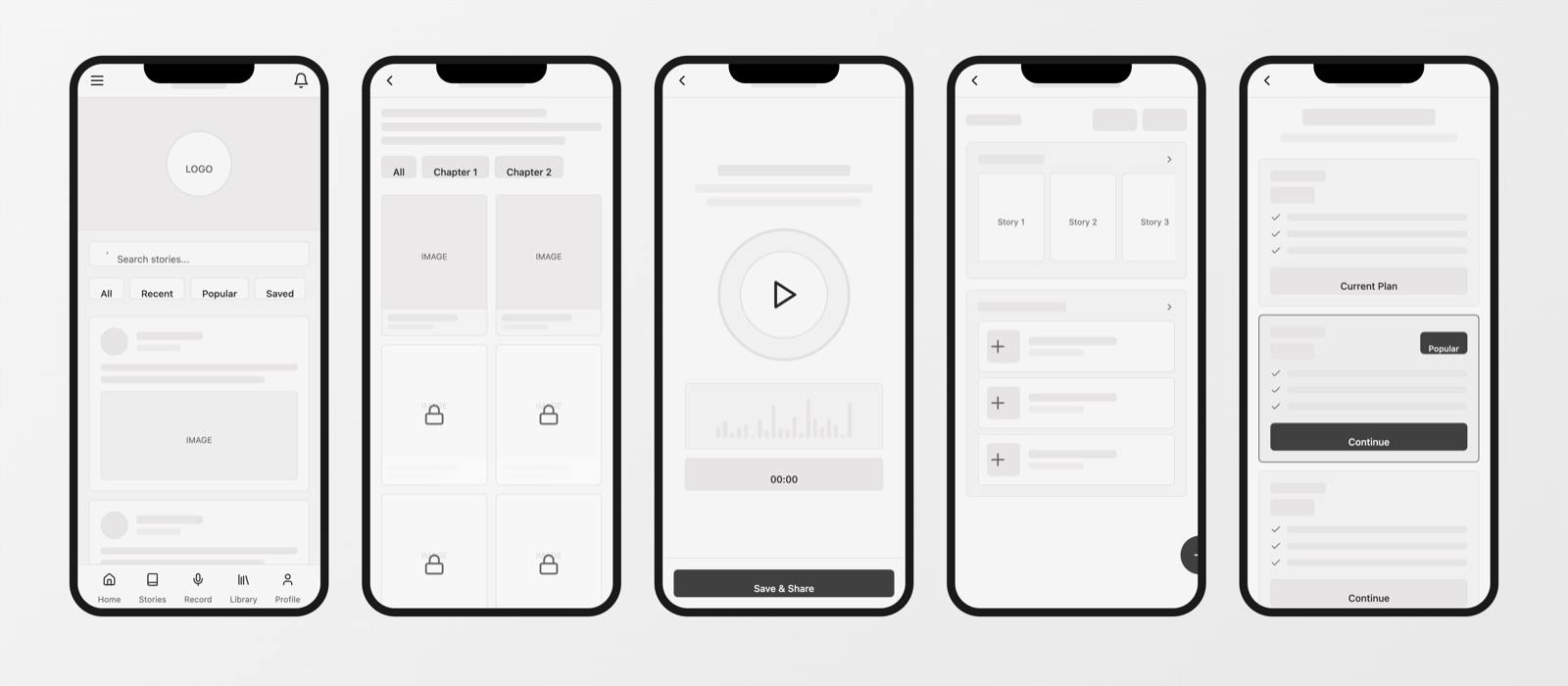
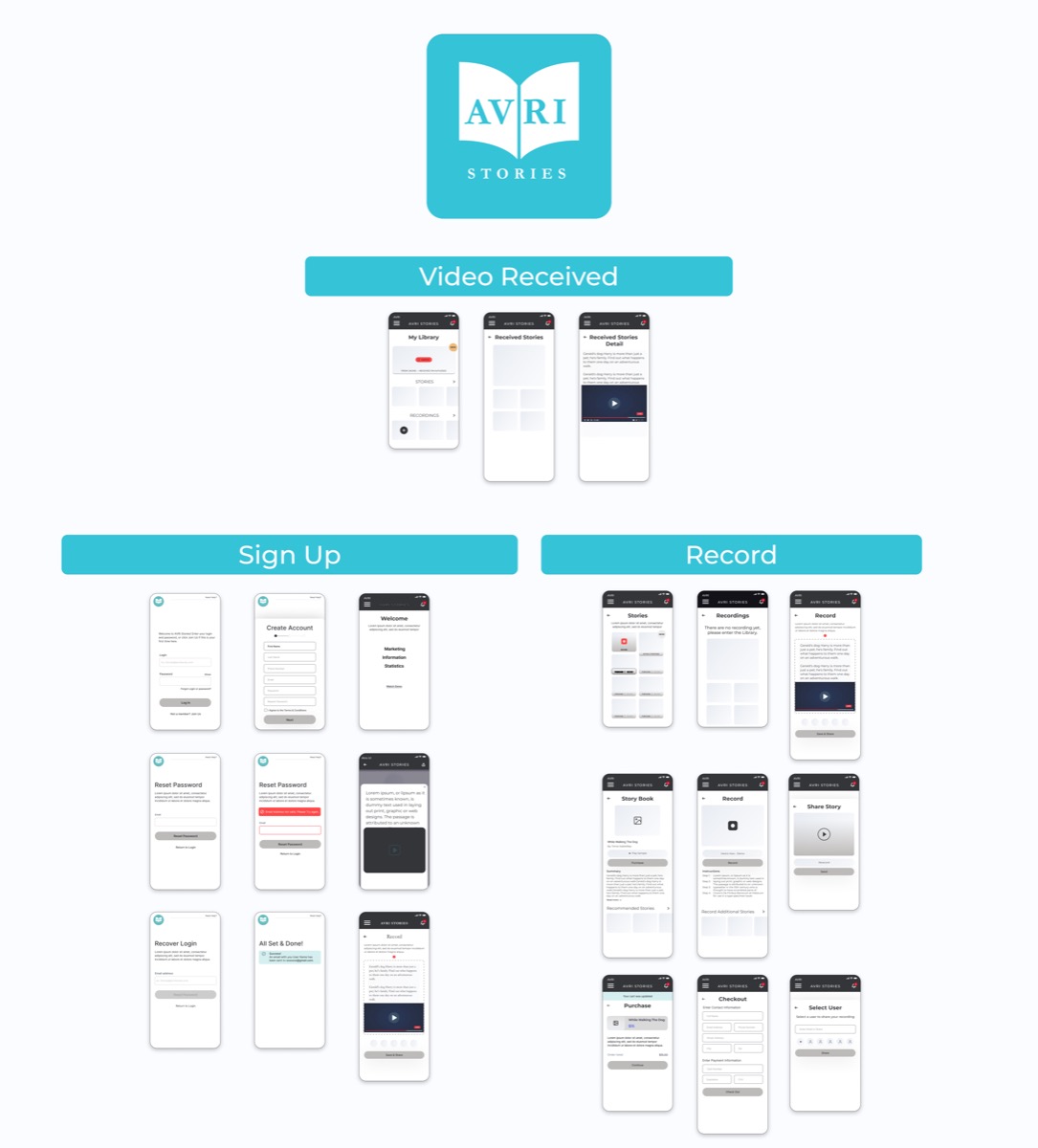
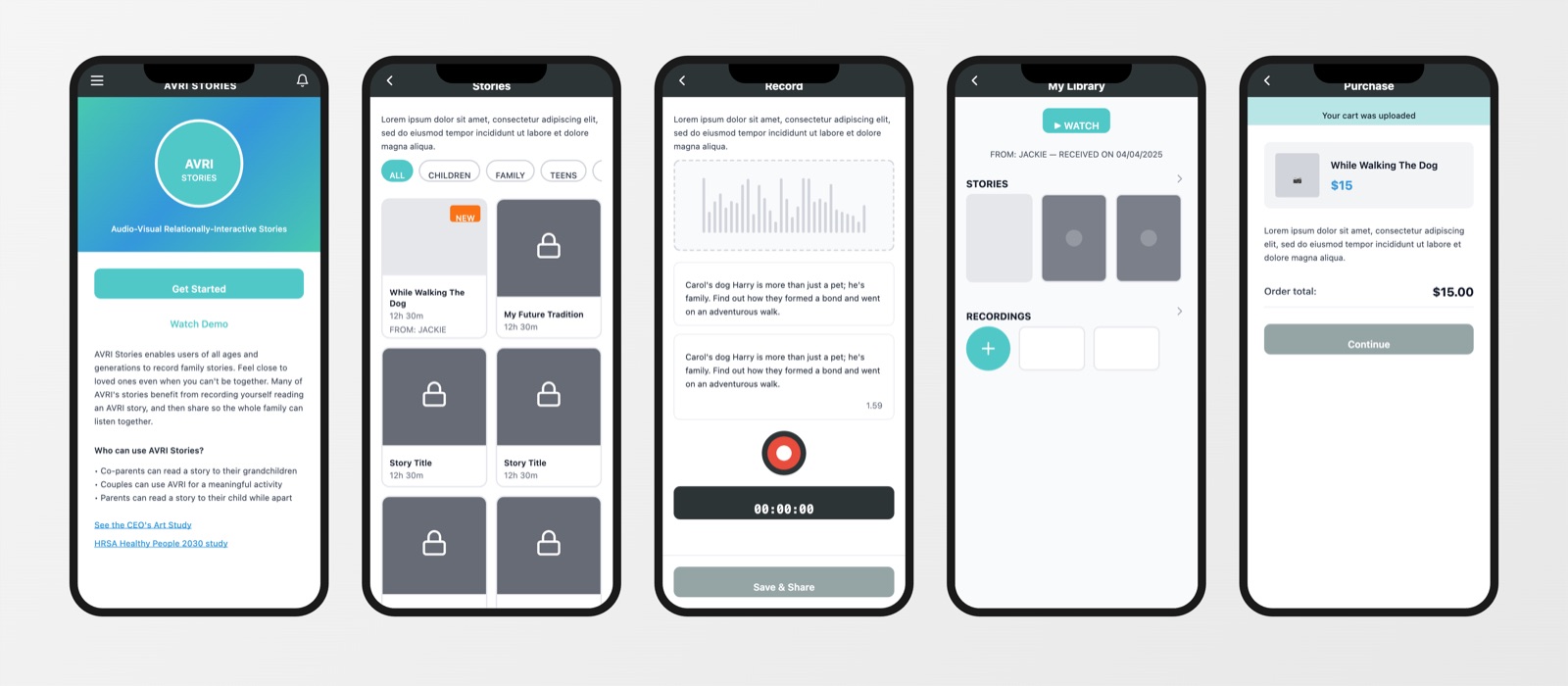
Residents in care facilities experiencing anxiety and agitation from missing family members
Physical separation preventing families from providing comfort and maintaining emotional connection
Traditional methods requiring real-time coordination across schedules and time zones
Lack of engaging, personal content that residents can access anytime for repeated comfort
Residents in care facilities often experience emotional distress caused by separation from loved ones. This distress frequently manifests as anxiety, agitation, or behavioral challenges that negatively impact quality of life and increase strain on caregivers. Families, in turn, struggle with guilt and helplessness, unable to provide consistent emotional support due to physical distance or health limitations.
Traditional communication methods such as phone calls or video chats require real time coordination and technical proficiency. These tools are often unreliable for individuals with cognitive decline and fail to provide comfort outside scheduled interactions. Families needed a solution that allowed them to offer emotional presence on demand, without requiring technical complexity or synchronized availability.
Separation from family caused measurable anxiety and agitation, leading to challenging behaviors
Residents benefited from replaying content multiple times for repeated comfort in familiar voices
Audio, video, and text options allowed users with varying abilities to engage effectively
Simple email sharing and guided recording encouraged participation regardless of technical skill
Research included observational insights from residential care environments and direct conversations with families navigating long term separation. These sessions revealed that emotional reassurance was often more impactful than live conversation, particularly when delivered through familiar voices and repeated exposure.
Findings also highlighted the importance of asynchronous access. Residents benefited from replaying content multiple times, while families valued the ability to create meaningful moments without scheduling pressure. Accessibility emerged as a core requirement, driving decisions around guided recording, email based sharing, and minimal interaction steps for recipients.
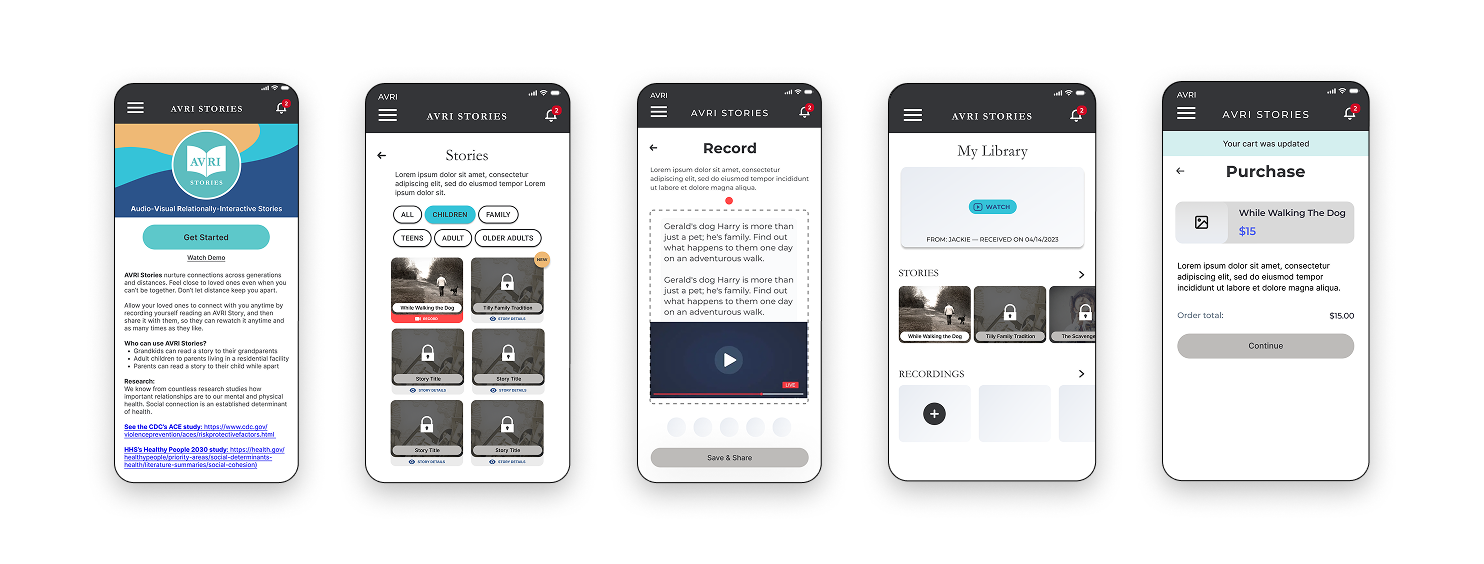
Guided interface with step-by-step instructions for ~7-minute story recording sessions
Simple email-based distribution system requiring no technical expertise from senders or recipients
Synchronized audio, video, and text options for accessibility and engagement flexibility
$4.99 per story for recorder; completely free for all recipients with unlimited replays
AVRI Stories was designed as an asynchronous storytelling experience that prioritizes emotional connection over real time interaction. The app enables family members to record short stories that combine audio, video, and text, allowing loved ones to engage at their own pace and revisit content whenever comfort is needed.
The solution emphasizes simplicity and accessibility through guided recording flows, email based sharing, and unlimited replay. These design choices reduce technical barriers while ensuring the experience remains emotionally resonant and usable for individuals with cognitive or sensory challenges.
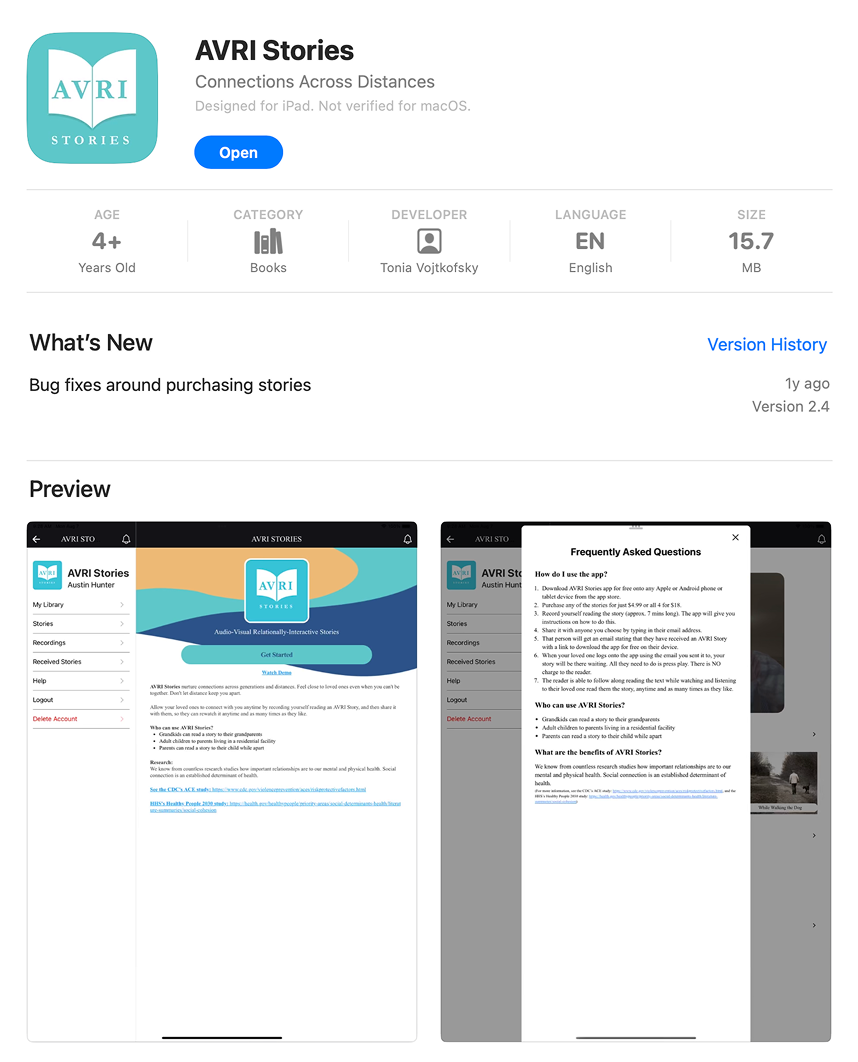
Although AVRI Stories has not yet publicly launched, early validation demonstrated strong interest and readiness for pilot testing. Care teams across multiple states expressed alignment with the product's goals, identifying clear opportunities to support residents' emotional well being.
Family interviews and prototype testing confirmed demand for asynchronous connection, with early feedback indicating increased feelings of closeness and reassurance. The project concluded with a fully designed, launch ready MVP prepared for real world evaluation in care and home environments.
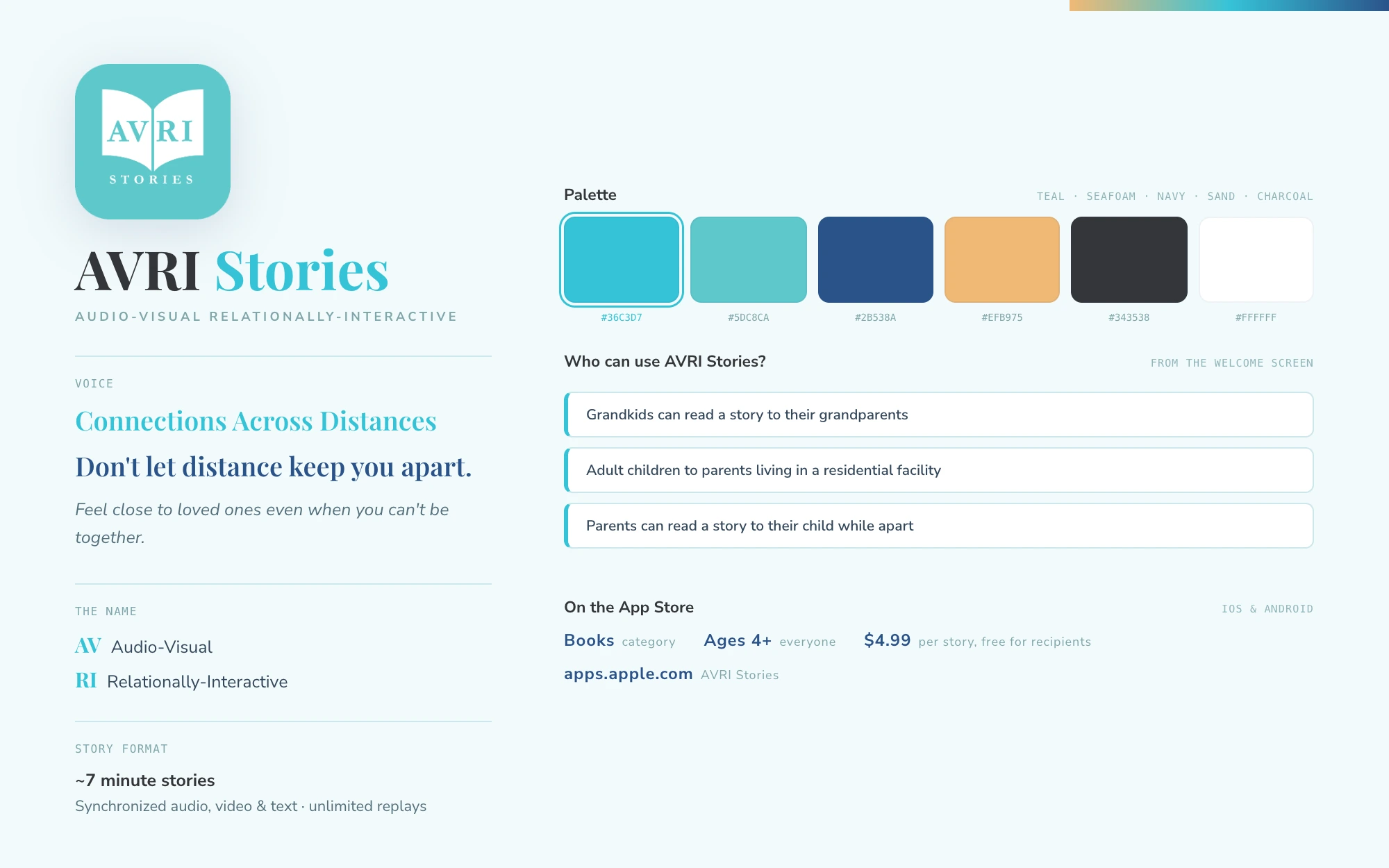
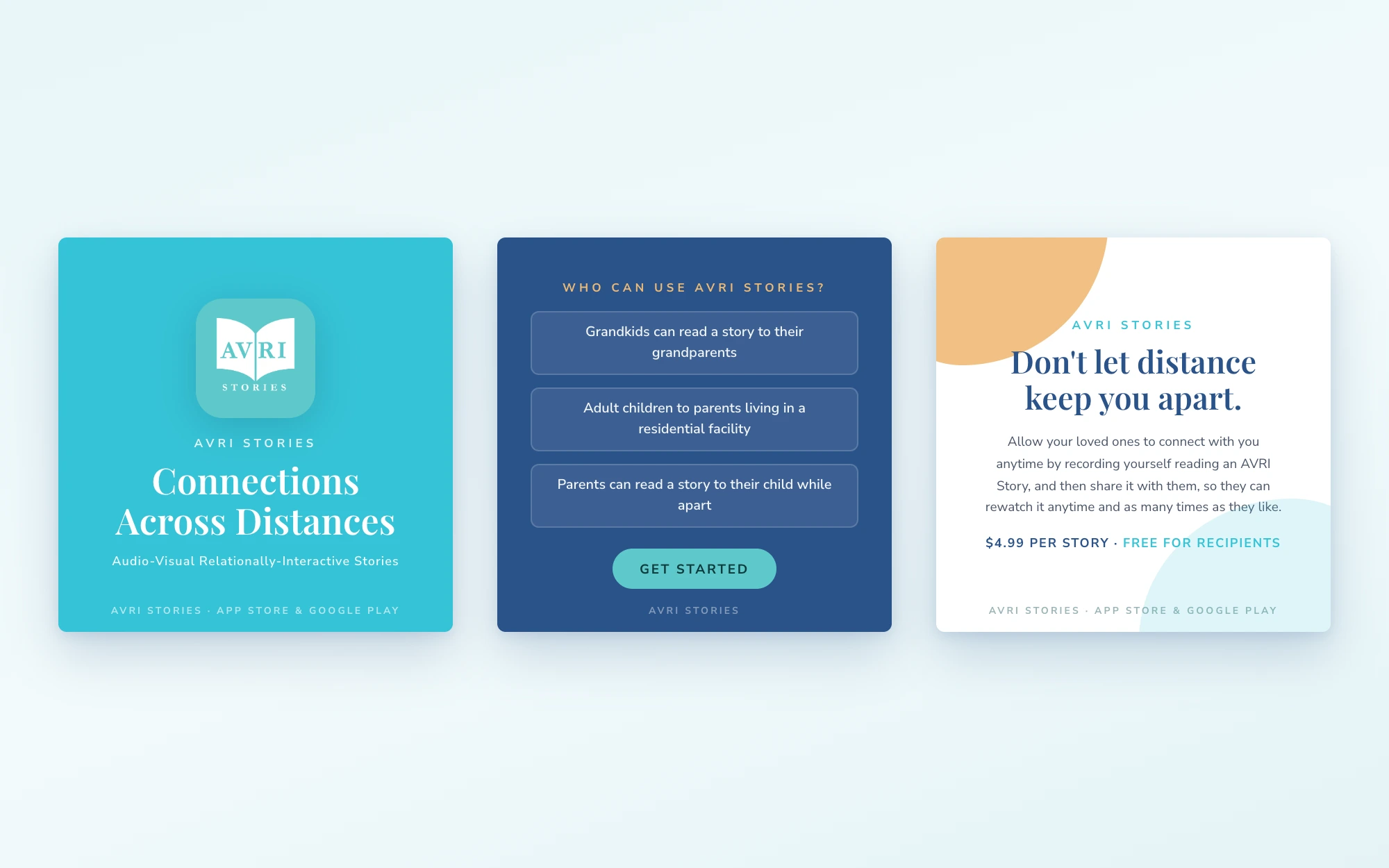
The Avri Stories brand system and the social templates built from it.